
Visual content has never been more central to digital success. Whether you’re running a brand, managing social media, building a course, or producing marketing campaigns, the quality of your images directly impacts how your audience engages with your content. The good news? AI image tools have matured dramatically, and the options available today are genuinely capable of transforming your creative workflow. Here are five AI image tools that deserve a place in your content creation stack right now.
1. Pollo AI — Best All-in-One AI Creative Platform
If you’re looking for a single platform that brings together all the powerful AI image tools under one roof, Pollo AI is where you should start. Rather than forcing you to juggle multiple subscriptions and interfaces, Pollo AI aggregates a wide range of leading AI generation models into one streamlined, user-friendly hub — making it the smartest choice for content creators who value efficiency and versatility.
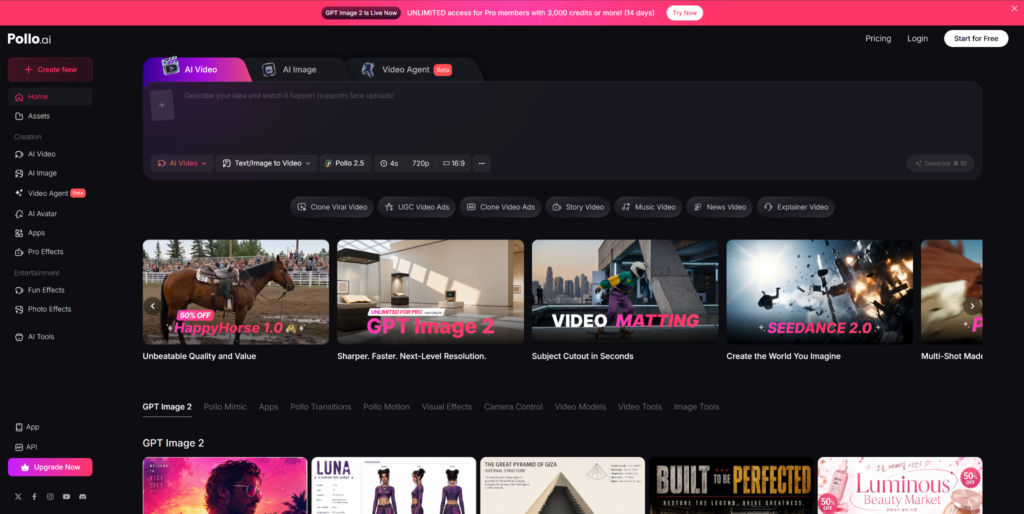
What makes Pollo AI stand out is the sheer breadth of what it offers. Need to generate photorealistic product images from a text prompt? Done. Want to animate a static image into a video clip? Pollo AI handles that too. The platform supports access to multiple top-tier AI models, meaning you’re not locked into a single generation engine — you can choose the tool best suited to each specific creative task.
For content creators who produce across multiple formats and platforms, this flexibility is invaluable. Instead of learning five different interfaces and managing five different billing cycles, Pollo AI centralizes everything. Whether you’re a solo creator or part of a larger content team, Pollo AI is the kind of platform that genuinely improves your workflow rather than complicating it.
2. Kaze AI — Best for Stylized and Artistic Image Generation
Kaze AI has been carving out a distinct identity in the AI image generation space, particularly among creators who want outputs that go beyond the generic and into something with genuine visual personality. Where many AI image tools default to a similar aesthetic, Kaze AI leans into stylization, offering a range of artistic modes that produce images with a distinctive, polished look that stands out in crowded content feeds.
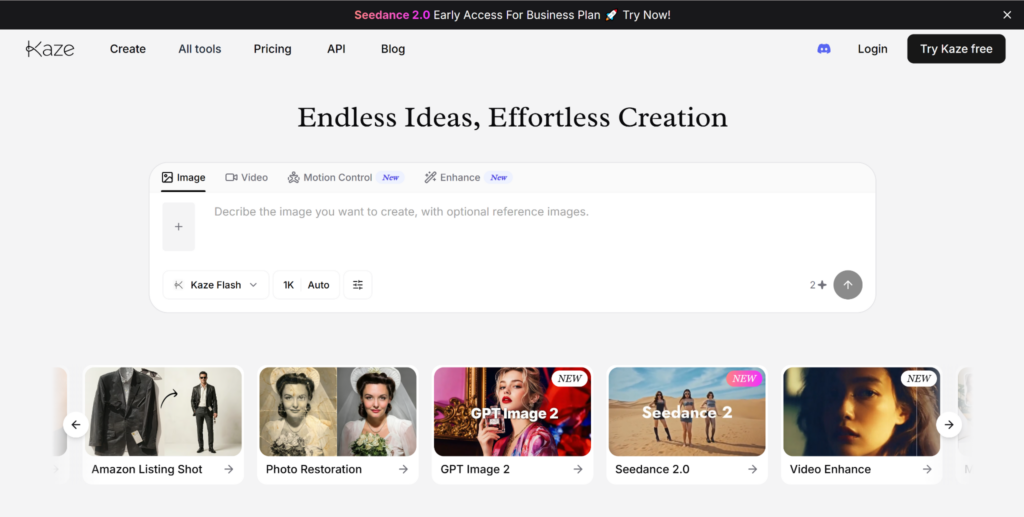
The platform is particularly well-suited for social media content creators, digital artists, and brand teams who need visuals with a consistent aesthetic identity. Kaze AI’s interface is clean and approachable, making it accessible even to users who are new to AI image generation, while still offering enough depth to satisfy more experienced creators who want fine-grained control over style and composition.
For content creators who prioritize visual differentiation — who want their images to feel crafted rather than generated — Kaze AI is a tool worth exploring seriously. Its outputs carry a quality and intentionality that makes it a strong complement to more utilitarian image generation tools.
3. Canva AI — Best for Non-Designers Who Need Professional Results
Canva has long been the go-to design platform for non-designers, and its AI-powered features have elevated it significantly in recent years. Canva’s Magic Studio suite brings together a collection of AI tools — including text-to-image generation, background removal, image enhancement, and smart resizing — all within the familiar Canva interface that millions of users already know and love.
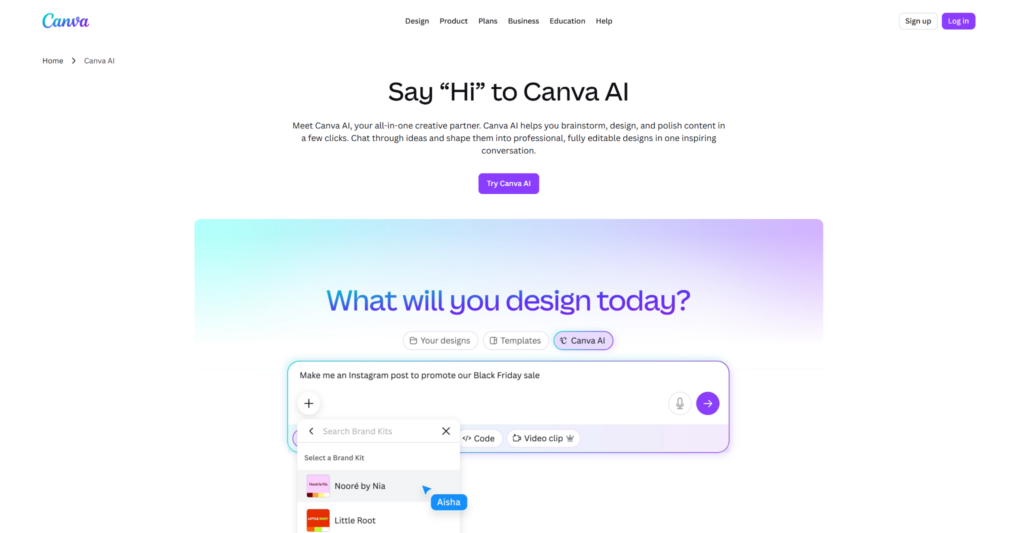
What makes Canva AI particularly powerful for content creation is how seamlessly it integrates with the broader design workflow. You’re not just generating an image in isolation — you’re generating it inside a platform where you can immediately drop that image into a social media post, presentation, blog graphic, or marketing banner. The end-to-end workflow from concept to finished, platform-ready asset is faster in Canva than almost anywhere else.
For marketers, educators, small business owners, and social media managers who need to produce high volumes of visually consistent content without deep design expertise, Canva AI is genuinely one of the most practical tools available. The AI features slot naturally into existing workflows rather than requiring users to adopt an entirely new creative process.
4. Adobe Firefly — Best for Professional and Commercial-Grade Image Creation
Adobe Firefly represents the enterprise end of the AI image generation spectrum, and it brings with it the credibility, precision, and commercial safety that professional creators and brand teams require. Built directly into Adobe’s Creative Cloud ecosystem, Firefly allows users to generate images, apply generative fill to existing photos, create text effects, and produce vector graphics — all within tools like Photoshop and Illustrator that professionals already rely on daily.
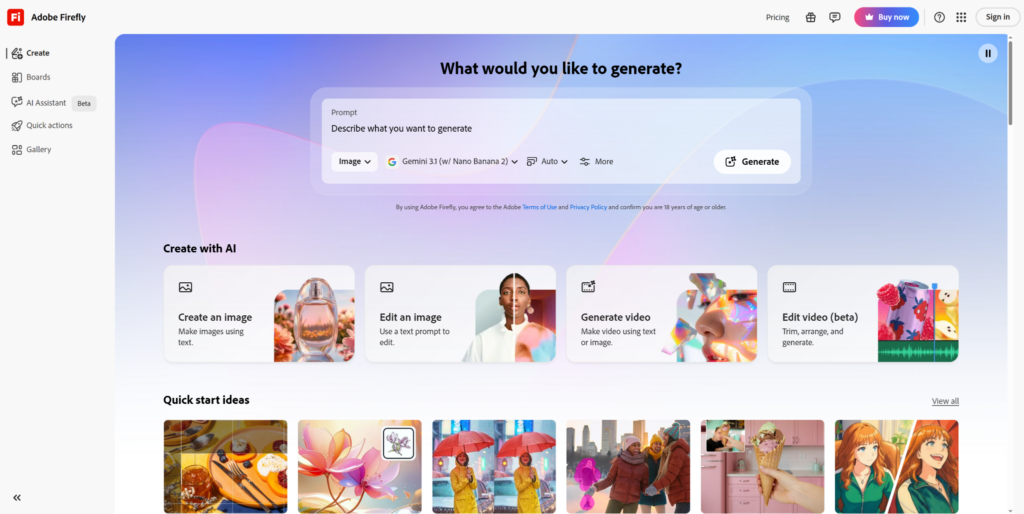
One of Firefly’s most important differentiators is its approach to training data. Adobe has been explicit about training Firefly on licensed, commercially safe content, which means outputs can be used in commercial projects without the intellectual property concerns that surround some competing tools. For agencies, brands, and professional creatives who need to be certain their AI-generated content is legally clear, this is a significant advantage.
The integration with Photoshop’s Generative Fill feature has been particularly transformative for photo editors and retouchers. The ability to expand an image beyond its original borders, remove and replace elements, or generate entirely new background environments using natural language prompts has fundamentally changed what’s possible in a single editing session. Firefly may not be the most accessible tool for casual creators, but for professionals already embedded in the Adobe ecosystem, it’s an indispensable addition to the toolkit.
5. ElevenLabs — Best for Multimedia Content Creators
While ElevenLabs is primarily known for its industry-leading AI voice generation, it represents a broader category of AI tools that content creators should be thinking about as part of an integrated visual and audio content strategy. The most effective content in 2026 isn’t purely visual — it combines compelling imagery with equally compelling audio, and building a workflow that addresses both is increasingly important for creators who want to compete at a high level.
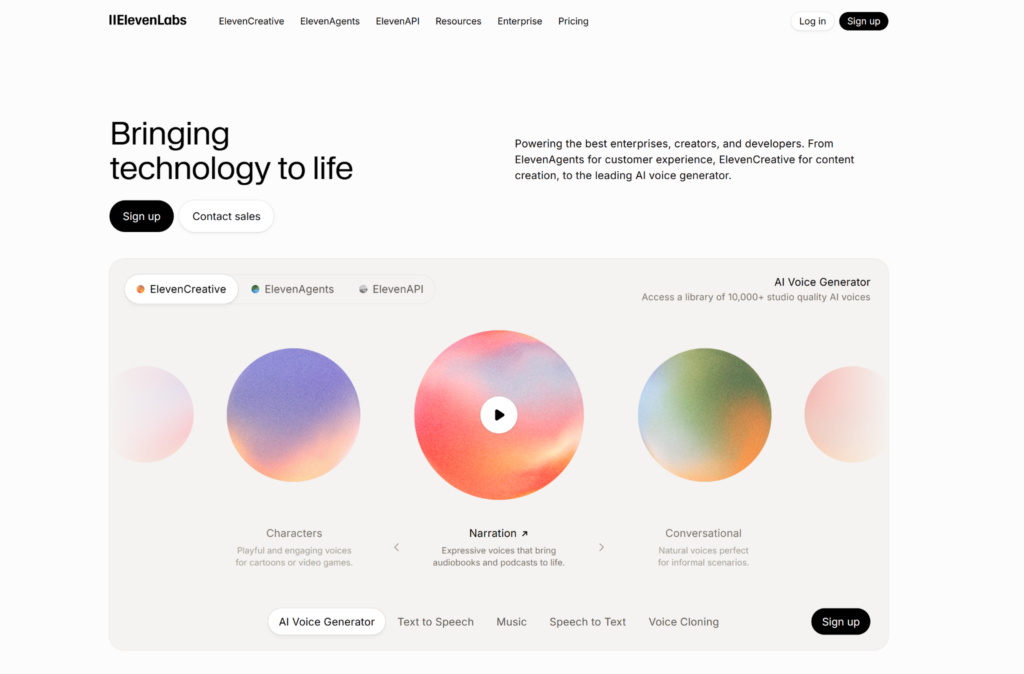
For content creators producing video essays, branded podcasts, explainer content, or any format where voiceover and imagery work together, pairing a strong AI image tool with ElevenLabs’ voice capabilities creates a genuinely powerful production pipeline. The combination allows solo creators to produce content that previously would have required a full production team — from custom visuals to professional-quality narration — at a fraction of the traditional cost and time investment.
The broader lesson here is that the most effective AI content creation strategies in 2026 aren’t about finding one perfect tool — they’re about building a stack of complementary tools that work together seamlessly 7. ElevenLabs occupies an important node in that stack for creators who think in multimedia terms.
6. Magic Hour — Best for AI-Powered Image and Video Creation
Magic Hour is a versatile AI creative platform for content creators who want to generate and transform visual content without relying on complex editing software. Alongside AI image generation, the platform offers tools for turning images into videos, creating animated visuals, and editing existing content with AI. This makes it a useful option for creators who need to move quickly from an initial idea to a finished visual.
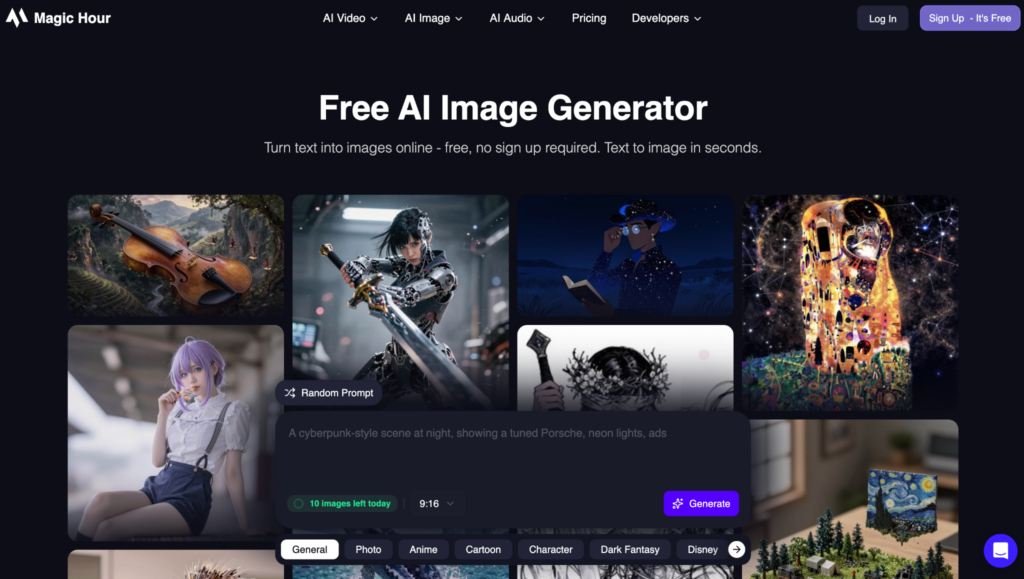
What makes Magic Hour particularly useful is the range of creative workflows it supports in one place. You can generate images from text prompts, transform static images into video clips, and experiment with different styles and formats without switching between multiple platforms. The ability to work with both images and video also makes it easier to repurpose a single visual concept across different types of content.
For social media creators, marketers, and small content teams, Magic Hour can help streamline the production process while keeping room for experimentation. It is especially appealing when you need to produce eye-catching visuals regularly but don’t have the time or resources for traditional design and video production. Rather than replacing the creative process entirely, it gives creators a faster way to explore ideas and turn them into polished content.
Building Your AI Content Creation Stack
The tools listed here represent different strengths and different points in the content creation workflow, and the smartest approach is to think about which combinition serves your needs rather than looking for a single solution that does everything.
AI image tools are professional infrastructure nowadays. Creators who build smart, efficient AI workflows now are the ones who will have a competitive advantage as the content landscape continues to evolve. Start exploring, start experimenting, and let these tools do the heavy lifting so you can focus on what matters most: telling great stories and building genuine connections with your audience.